
"000 tons"
800 article(s) found

The relationship between Yunnan small Coffee and Katim Coffee beans Why does Catimor Katim's hand flush taste bad?
Professional coffee knowledge exchange more coffee bean information please follow the coffee workshop (Wechat official account cafe_style) small-grain coffee [scientific name] small-grain species is Coffea arabica L., medium-grain species is Coffea canephora, large-grain species are Coffea liberica family: Rubiaceae coffee genus [alias] small-grained species also known as Arabian species, medium-grained species also known as Ganfla species, large-grained species

Yunnan Coffee Special Train shortens the sales cycle of direct orders to Europe
Recently, the Yuxin European freight train opened a special coffee train for the first time. Yunnan Coffee runs directly from Chongqing to Duisburg, Germany, which takes about 14 days, which is about 2/3 less time than the traditional shipping method. This will change Yunnan's relatively closed trade situation in the hinterland of the southwest, participate in the world economic cycle with coffee and integrate into Belt and Road Initiative's strategy. Hu Lubiao, Deputy Secretary-General of Yunnan Coffee Industry Association

Luckin Coffee opened a second baking factory! Is Ruixing's product stable and delicious?
Professional coffee knowledge exchange more coffee bean information please follow the coffee workshop (Wechat official account cafe_style) more boutique coffee beans please add private Wechat Qianjie coffee, WeChat: qjcoffeex has 7846 + stores of Luckin Coffee, need a bigger baking factory! With

Introduction to the characteristics of Ethiopian Coffee Flavor Manor with acidity and texture
5% of the coffee belongs to plantation coffee. This is a modern way of growing. Coffee is also grown in a forest, but new varieties are used and planted in rows with other shade trees. Due to different processing methods, coffee can be divided into washed coffee (Washed coffee) and sun-cured coffee (Sun-dried coffee). Washed coffee accounts for 35% of exports. Of good quality

Introduction to the Flavor description Price of Tanzania's Fine Coffee beans
The national average annual output of wheat is 70, 000 tons, and the largest wheat production unit is the HANNANG wheat complex, which is composed of several farms with a total planting area of 4000 hectares. These farms are located in the Hannang district of Arusha and are all autonomous subsidiaries of NAFCO. In the 1970s, NAFCO developed and operated these farms with the help of the Canadian International Development Agency (CIDA)

Yemeni Coffee-the vanishing Arab Wild
Although Ethiopia is the birthplace of Arabica, the first coffee that Europeans drank from the end of the 17th century to the beginning of the 18th century came from Yemen. At that time, all African or Arabian coffee was exported from the port of Mocha, so that Mocha became synonymous with coffee, while Harald, the capital of the city walls, became a supporting role. However, three hundred years later, Yemeni coffee is no longer what it used to be.

Angora coffee beans
Angola's Angola, which has been growing coffee for more than 100 years, ranked first in Africa until 1960 and reached 225000 tons in 1979, ranking second in Africa and fourth in the world. The output in 1992 was 5000 tons. Sisal production is second only to coffee, and the level of per unit yield is higher. In 1986, the output reached 20,000 tons, sisal ranked second in Africa both in terms of output and export volume. Luo'an, Xinhuanet
African coffee Angora coffee beans
Angolan coffee Angola Angola has been growing coffee for more than 100 years, and its output has been the first in Africa until 1960, reaching 225000 tons in 1979, ranking second in Africa and fourth in the world. The output in 1992 was 5000 tons. Sisal production is second only to coffee, and the level of per unit yield is higher. In 1986, the output reached 20,000 tons, sisal ranked second in Africa both in terms of output and export volume.
Price of Angolan coffee beans
Angolan coffee Angola Angola has been growing coffee for more than 100 years, and its output has been the first in Africa until 1960, reaching 225000 tons in 1979, ranking second in Africa and fourth in the world. The output in 1992 was 5000 tons. Sisal production is second only to coffee, and the level of per unit yield is higher. In 1986, the output reached 20,000 tons, sisal ranked second in Africa both in terms of output and export volume.

History of introduction and expansion of Coffee in early China (5)
1. From the first peak period of the development of China's coffee industry (1952-1961) to the late 1940s, according to recorded figures, there are 2173.33 hectares of rubber plantations in Hainan Island, with a total of 867600 rubber trees, with an annual output of 199,000 tons of dry rubber, and more than 300,000 coffee plants. the annual output of coffee beans is 1 ton. According to a survey in the early 1950s, there was a large amount of coffee left in Fushan area of Chengmai County, with a total of 70,000.

Tanzania coffee boutique coffee beans introduce flavor and taste manors in producing areas
Wheat: the national average annual output of wheat is 70, 000 tons, and the largest wheat production unit is the HANNANG wheat complex, which is composed of several farms with a total planting area of 4000 hectares. These farms are located in the Hannang district of Arusha and are all autonomous subsidiaries of NAFCO. In the 1970s, NAFCO developed and operated these with the help of the Canadian International Development Agency (CIDA).
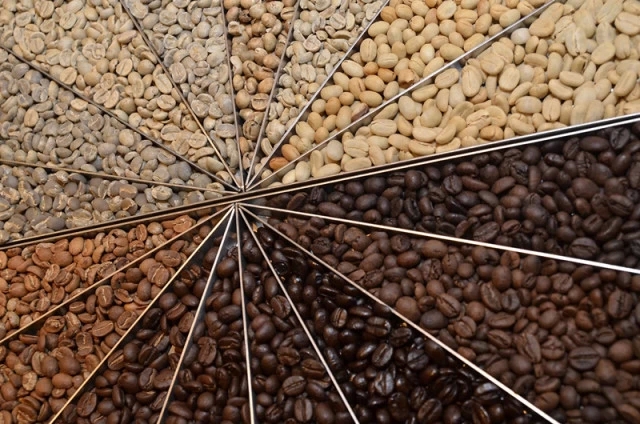
Brazil's COCAPEC predicts that coffee production by its members will fall by half in 2015
COCAPEC said the decline in coffee was mainly due to severe drought and the superposition of coffee production in a small year. The output of coffee trees has a cycle every two years, with high yield in one year and low yield the next year. The COCAPEC Coffee Cooperative, which has 2200 farmers, is expected to produce about 1 million bags (60, 000 tons) in 2015, down by half from 2 million bags (120000 tons) last year. COCAPEC Cafe
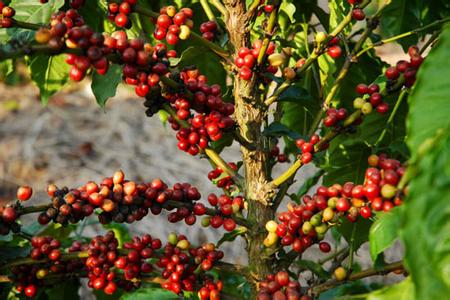
Yunnan Coffee will take the train to Europe from July 1.
Kunming has a dry climate and cheap warehousing, and the Yunnan-Xinou special railway freight train makes Kunming likely to become a distribution center for global coffee companies to purchase coffee from Yunnan. Xiong Xiangren, chairman of Dehong Hougu Coffee Co., Ltd., told reporters at the signing ceremony. Yesterday, Kunming Railway Bureau and Dehong Hougu Coffee Co., Ltd. jointly created the Kunming to Europe (Yunnan New Europe) coffee international freight train signing ceremony in

Introduction to the characteristics of Yemeni Coffee Flavor Manor and the planting Environment of Fine Coffee in Yemen
There are many varieties of Yemeni coffee, most of which are named after their origin and type, with different flavors, such as fresh wood, tobacco, musk, fruit wine, roasted nuts, cocoa and warm seasonings, especially Moha coffee. At present, Yemeni Moha coffee is the most famous Yemeni Moha coffee on the market, such as Isemary, Matari, Sanani and so on. Sanani coffee has medium grain size and fruit wine style.

The largest freeze-dried coffee project in China is located in Chongqing bonded Port area.
Chongqing coffee industry ushered in new development. Following the establishment of Chongqing Coffee Trading Center in June this year, the largest freeze-dried coffee production project in China with a total investment of about 1 billion yuan was officially settled in Chongqing bonded Port area on November 20. Yesterday, a reporter from the Chongqing Times learned from Liangjiang New area that the project will introduce the world's most advanced fully automated production line, including the annual production line of freeze-dried instant coffee.
African specialty coffee Angola boutique coffee beans
Angolan coffee Angola Angola has been growing coffee for more than 100 years, and its output has been the first in Africa until 1960, reaching 225000 tons in 1979, ranking second in Africa and fourth in the world. The output in 1992 was 5000 tons. Sisal production is second only to coffee, and the level of per unit yield is higher. In 1986, the output reached 20,000 tons, sisal ranked second in Africa both in terms of output and export volume.
Coffee planting History of Coffee introduction and expansion in China in the early stage (5)
1. From the first peak period of the development of China's coffee industry (1952-1961) to the late 1940s, according to recorded figures, there are 2173.33 hectares of rubber plantations in Hainan Island, with a total of 867600 rubber trees, with an annual output of 199,000 tons of dry rubber, and more than 300,000 coffee plants. the annual output of coffee beans is 1 ton. According to a survey in the early 1950s, there was a large amount of coffee left in Fushan area of Chengmai County, with a total of 70,000.

Introduction to the unique flavor and taste characteristics of Ethiopian coffee manor
A large amount of coffee production (95%) is done by small shareholders, with an average yield of 561 kg per hectare. For centuries, minority holders of Ethiopian coffee farms have been producing a variety of high-quality types of coffee. The secret of producing high-quality coffee is that coffee growers have developed environmental conditions through generations of repeated learning about the coffee planting process.
The History of Coffee introduction and expansion in China in the early stage (5)
1. From the first peak period of the development of China's coffee industry (1952-1961) to the late 1940s, according to recorded figures, there are 2173.33 hectares of rubber plantations in Hainan Island, with a total of 867600 rubber trees, with an annual output of 199,000 tons of dry rubber, and more than 300,000 coffee plants. the annual output of coffee beans is 1 ton. According to a survey in the early 1950s, there was a large amount of coffee left in Fushan area of Chengmai County, with a total of 70,000.